Add Backs In a Business Sale
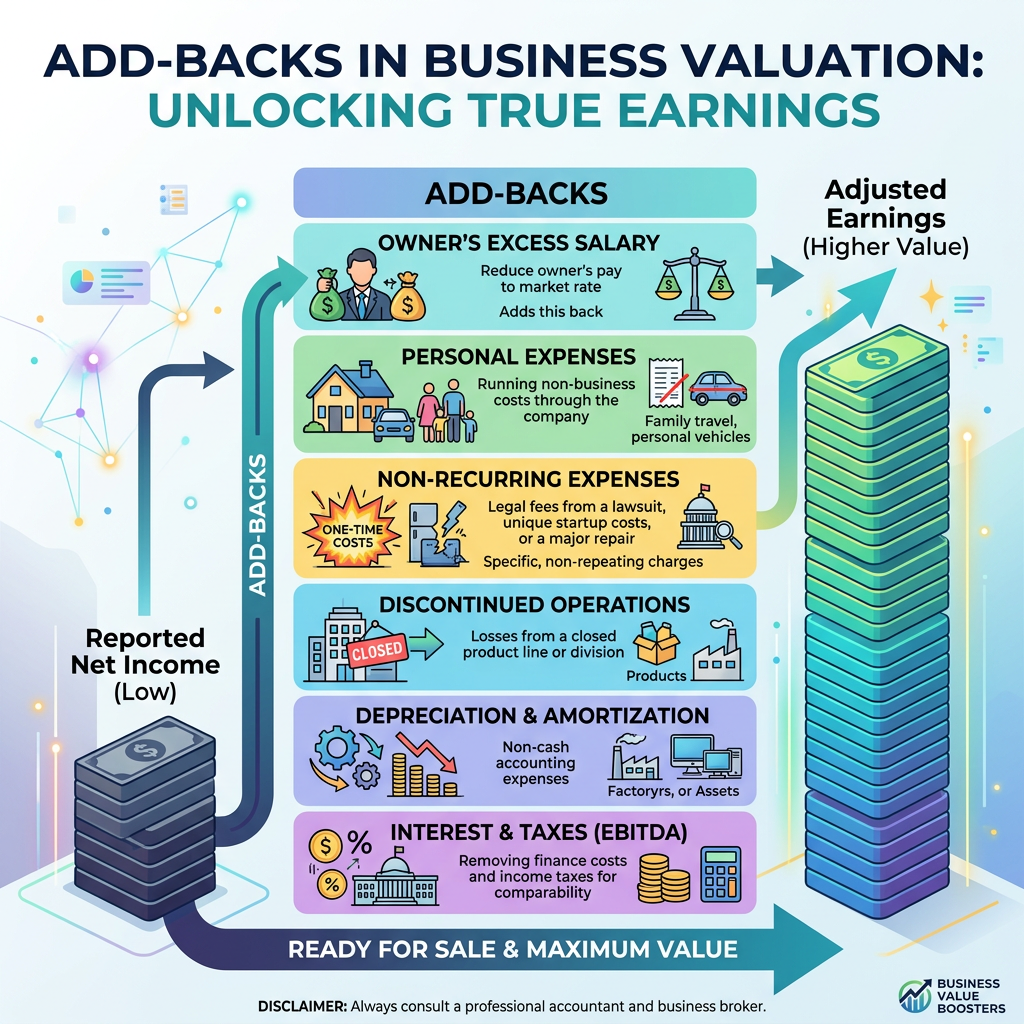
Add backs are expenses added back to a business’s profit to show the real earnings available to a buyer.
They are commonly used when valuing a small or medium business.
The aim is simple: show the profit a buyer may reasonably expect before personal, one-off or non-operating expenses are included.
Add backs are a key part of most business valuation discussions because they affect maintainable earnings.
Why Add Backs Matter
Most small businesses are run by owner-operators.
That means the financial statements may include expenses that are legal and normal for tax purposes, but may not reflect the true earning power of the business for a buyer.
Add backs help adjust the profit so the business can be assessed more fairly.
Owners asking “how much is my business worth?” need to understand which expenses a buyer may accept as genuine add backs.
Simple Example
A business shows a net profit of $180,000.
The accounts include:
Owner’s personal vehicle expenses
One-off legal fees
Non-recurring repairs
Owner superannuation
Family wages above market value
Some of these costs may be added back if they are not expected to continue under a new owner.
After reviewing the numbers, the adjusted profit may be higher than the accounting net profit.
That adjusted figure can then be used when discussing business value.
For larger or more adjusted deals, PEBITDA may also be used to explain normalised earnings.
Common Add Backs
Common add backs may include:
Owner salary or drawings
Personal vehicle expenses
One-off legal or accounting costs
Non-recurring repairs
Private travel
Family wages not required by the business
Interest
Depreciation
Amortisation
One-off bad debts
Non-business subscriptions
Personal phone or internet use
Not every expense can be added back. It must be reasonable and supportable.
If you are preparing financials for sale, our how to sell a business guide explains where add backs fit into the process.
What Cannot Always Be Added Back
This is where sellers need to be careful.
A cost should not be added back just because the owner does not like it.
If the cost is required to run the business, a buyer will usually treat it as a real expense.
Examples may include:
Normal wages
Rent
Insurance
Stock
Advertising
Equipment repairs
Software needed to operate
Vehicle costs required for operations
Replacement manager wages if the owner leaves
A buyer, accountant or lender will usually test whether the add back is genuine.
Once your earnings are clear, our sell my business page explains how to prepare for buyer discussions.
Add Backs And Business Valuation
Add backs can affect business value because many businesses are valued using adjusted earnings.
A simplified method looks like this:
Adjusted business profit x industry multiple = estimated business value
If the adjusted profit is wrong, the valuation can be wrong.
This is why add backs need to be prepared carefully.
Overstating add backs can make the business look overpriced and damage buyer trust.
Add backs can directly affect a business valuation Townsville because buyers usually focus on maintainable earnings.
Add Backs Need Evidence
Good add backs should be supported by clear records.
A buyer may ask:
Why was this expense added back?
Will this cost continue after settlement?
Was it personal, one-off or unrelated to operations?
Can it be proven in the accounts?
Would a bank accept the adjustment?
If the answer is weak, the buyer may reject the add back.
Owner Wages And Add Backs
Owner wages are one of the most common areas of confusion.
If the owner works full-time in the business, a buyer will consider what it costs to replace that role.
In some cases, owner wages are added back first, then a fair market wage is deducted.
This helps show the true return to the owner or investor.
The right treatment depends on the business model, owner involvement and buyer type.
Add Backs In Regional Businesses
In regional markets, add backs can be especially important.
Many businesses in Townsville, Mackay, the Whitsundays and surrounding areas are owner-operated. The owner may handle sales, quoting, operations, staff, ordering and customer relationships.
That makes it important to separate personal owner benefits from real operating costs.
Get Add Backs Right Before Going To Market
Add backs should be reviewed before the business is listed for sale.
If they are prepared properly, they can help buyers understand the business. If they are prepared poorly, they can create doubt.
A clean add back schedule can improve buyer confidence and make due diligence easier.
Need Help Reviewing Add Backs?
Northern Business Brokers helps business owners prepare their numbers before going to market.
We can help identify likely add backs, explain how buyers may view the profit and prepare the business for a more informed sale process.
Contact Northern Business Brokers to discuss your business valuation and add backs.
 Northern Business Brokers